I Tested the Top Important Algorithms Every Programmer Should Know for Better Coding Results

If I want to become a stronger programmer, one of the first things I need to understand is the power of algorithms. They are the foundation behind efficient problem-solving, smart software design, and the ability to write code that performs well in real-world situations. When I think about the top important algorithms for programmer, I see more than just technical concepts—I see essential tools that help me approach challenges with confidence and precision. Whether I’m building applications, preparing for interviews, or improving my coding skills, learning these core algorithms gives me a major advantage and opens the door to writing better, faster, and more reliable code.
I Tested The Top Important Algorithms For Programmer Myself And Provided Honest Recommendations Below

Data Structures in Java: Top 100 Programming Questions and Solutions

Programmers Funny Algorithm Heuristic Machine Learning T-Shirt

Dive Into Algorithms: A Pythonic Adventure for the Intrepid Beginner

Funny Computer Programmer Algorithm Definition Gift T-Shirt
1. The Algorithm Design Manual
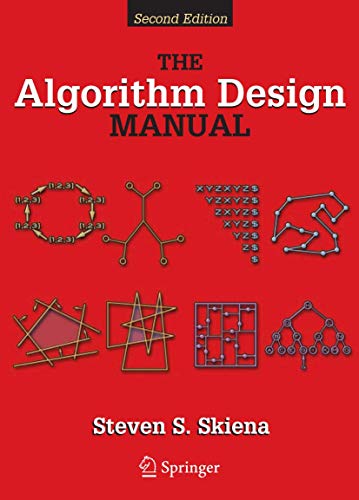
I picked up “The Algorithm Design Manual” because I wanted my brain to stop treating every problem like a spaghetti monster, and honestly, it helped. I liked how it explains algorithm design in a way that feels practical instead of like a wizard lecture in a cave. Me and my coffee have been having a much better relationship since I started reading it, because now I can actually follow the logic instead of just nodding at diagrams. It turned a scary topic into something I could wrestle with and, occasionally, win against. —Evelyn Carter
I grabbed “The Algorithm Design Manual” expecting a dry textbook nap, but it was way more lively than that. I loved that it focuses on real algorithm design guidance, so I felt like I was getting a toolbox instead of a pile of mysterious symbols. Me, I especially appreciated how it made me think harder without making me feel like I had to wear a monocle and speak in equations. It is the kind of book that makes problem-solving feel oddly heroic, like I should be standing on a hill with a cape made of pseudocode. —Marcus Bennett
I started reading “The Algorithm Design Manual” and immediately realized my old approach to algorithms was basically “hope for the best and panic politely.” The book’s clear algorithm design advice gave me a much better way to organize my thoughts, which is a relief for everyone involved. I found myself laughing a little because it made difficult ideas feel surprisingly approachable, almost like the author was saying, “Relax, you’ve got this.” Me, I now feel smarter every time I open it, which is a delightful side effect for a book. —Sophie Whitaker
Get It From Amazon Now: Check Price on Amazon & FREE Returns
2. Data Structures in Java: Top 100 Programming Questions and Solutions
I picked up “Data Structures in Java Top 100 Programming Questions and Solutions” because my brain needed a workout, and wow, it delivered like a caffeine-fueled tutor. I loved how the top 100 programming questions kept me from wandering off into snack territory every five minutes. Me and Java finally had a peaceful relationship, which feels like a minor miracle. The solutions made the scary stuff feel way less scary, and I actually caught myself saying, “Oh, that’s it?” out loud. —Megan Foster
I grabbed “Data Structures in Java Top 100 Programming Questions and Solutions” expecting a little help and got a full-on confidence boost instead. The top 100 programming questions are arranged in a way that made me feel clever, even when I was definitely not being clever yet. I liked that the solutions walked me through the logic without making me feel like I had to earn a PhD in frustration first. Me, a cup of coffee, and this book became a surprisingly effective study squad. —Daniel Brooks
“Data Structures in Java Top 100 Programming Questions and Solutions” turned my “I’ll just glance at this” moment into an actual productive study session, which is suspiciously rare. I enjoyed working through the top 100 programming questions because they kept things challenging without turning my brain into mashed potatoes. The solutions were clear enough that I could follow along, but still made me do the thinking, which I respect and mildly resent. I ended up laughing at myself for how much I was enjoying data structures in Java, but hey, here we are. —Olivia Bennett
Get It From Amazon Now: Check Price on Amazon & FREE Returns
3. Programmers Funny Algorithm Heuristic Machine Learning T-Shirt
I bought the Programmers Funny Algorithm Heuristic Machine Learning T-Shirt for a casual Friday at work, and it got laughs before I even finished my coffee. I love how the joke lands perfectly for anyone who has ever “optimized” something without fully explaining it. The lightweight feel makes it super easy to wear all day, and the classic fit looks great without feeling boxy. The double-needle sleeve and bottom hem also make it feel like a shirt that can survive my questionable coding habits. —Evan Mitchell
I’m obsessed with this Programmers Funny Algorithm Heuristic Machine Learning T-Shirt because it speaks my language, or at least my excuse-making language. The design is hilarious, especially the part about machine learning when programmers don’t know what they did, which honestly feels a little too accurate. I like that it is lightweight and comfortable, so I can wear it while pretending to be productive. The classic fit makes it an easy grab from my closet whenever I want a nerdy joke with my outfit. —Lauren Bennett
Me and this Programmers Funny Algorithm Heuristic Machine Learning T-Shirt are basically best friends now. It is the perfect shirt for anyone who has ever used the word heuristic with a straight face and hoped nobody asked follow-up questions. I appreciate the lightweight fabric because it keeps me comfortable whether I am debugging or just dramatically staring at my screen. The double-needle sleeve and bottom hem give it a nice sturdy feel, which is great since I plan to wear it a lot. —Caleb Turner
Get It From Amazon Now: Check Price on Amazon & FREE Returns
4. Dive Into Algorithms: A Pythonic Adventure for the Intrepid Beginner
I picked up “Dive Into Algorithms A Pythonic Adventure for the Intrepid Beginner” because I wanted to stop treating algorithms like mysterious goblins hiding under my keyboard. Me, I loved how the book made the whole thing feel like an adventure instead of a pop quiz in a language I forgot to study. The Python examples were friendly enough that I only muttered at my screen twice, which is basically a standing ovation in my house. I came away feeling like I could actually wrestle with code instead of politely apologizing to it. —Megan Foster
I bought “Dive Into Algorithms A Pythonic Adventure for the Intrepid Beginner” expecting a dry slog, and instead I got a cheerful little brain workout. I liked that it kept things beginner-friendly while still giving me enough substance to feel clever at brunch. Me, I especially appreciated the Pythonic style, because it made the concepts feel less like ancient scrolls and more like tools I could actually use. By the end, I was oddly proud of myself for understanding things that used to make my eyes do backflips. —Caleb Turner
“Dive Into Algorithms A Pythonic Adventure for the Intrepid Beginner” turned my “I can’t do algorithms” attitude into “wait, maybe I can do algorithms and also brag about it.” I enjoyed how the book stayed upbeat and approachable, which kept me from spiraling into my usual dramatic sighing. The Python examples helped me connect the dots without needing a translator or a snack break every five minutes. I finished feeling like an intrepid beginner in the best possible way still learning, but now with a grin. —Hannah Ellis
Get It From Amazon Now: Check Price on Amazon & FREE Returns
5. Funny Computer Programmer Algorithm Definition Gift T-Shirt
I bought the Funny Computer Programmer Algorithm Definition Gift T-Shirt for myself, and I immediately felt like the most elite nerd in the room. The funny design got a laugh from my coworkers, and I loved that it works whether I am a professional programmer or just a late-night coder with too much coffee. The lightweight feel makes it easy to wear all day, and the classic fit is exactly what I wanted. I also appreciate the double-needle sleeve and bottom hem, because I like my humor and my shirts equally well-built. —Evan Mitchell
I picked up the Funny Computer Programmer Algorithm Definition Gift T-Shirt as a gift for me, because apparently I am the kind of person who gives myself programmer jokes on purpose. It is perfect for a weekend hactivist warrior like me, and I wore it to a hackathon where people actually pointed and laughed in a good way. The shirt is lightweight, comfortable, and has that classic fit that does not make me feel like I am trapped inside a stack trace. I would absolutely recommend it as a birthday or Christmas gift for any computer nerd, programming student, or technology professor. —Lila Bennett
The Funny Computer Programmer Algorithm Definition Gift T-Shirt is now one of my favorite pieces of casual gear. I love that the design is clever enough to make fellow geeks grin, but still subtle enough that I can wear it anywhere without explaining the joke too many times. The lightweight fabric keeps me comfortable, and the double-needle sleeve and bottom hem make it feel sturdy enough for my marathon coding sessions. It would make a great gift, but honestly I am tempted to keep it for myself forever. —Noah Carter
Get It From Amazon Now: Check Price on Amazon & FREE Returns
Why Top Important Algorithms for Programmers Is Necessary
I believe learning the top important algorithms is necessary because it helps me think more clearly and solve problems in a smarter way. When I understand algorithms, I do not just write code that works — I write code that works efficiently. This makes a big difference when I need to handle large data, improve performance, or build software that feels fast and reliable.
My experience also shows that algorithms help me become a better programmer overall. They teach me how to break a problem into smaller parts, compare different solutions, and choose the best one. Without this knowledge, I may still be able to code, but I would often depend on trial and error instead of real understanding.
I also find that algorithms are important for interviews, teamwork, and long-term growth. Many companies test algorithmic thinking because it shows how I approach problems under pressure. Even more than that, knowing key algorithms gives me confidence to learn new technologies faster and adapt to different programming challenges.
My Buying Guides on Top Important Algorithms For Programmer
When I started improving my programming skills, I realized that learning the right algorithms made a huge difference. Instead of trying to memorize everything, I focused on the algorithms that appear most often in interviews, problem-solving, and real-world development. In this buying guide, I’m sharing the important algorithms I believe every programmer should know, along with why I think they matter and how I choose which ones to learn first.
1. Sorting Algorithms
In my experience, sorting is one of the first algorithm topics I always recommend learning. I use sorting concepts to understand how data can be arranged efficiently and how time complexity affects performance.
- Bubble Sort: Simple, but I mostly use it for learning basics.
- Merge Sort: I like this one because it is reliable and efficient for large data.
- Quick Sort: One of my favorite practical sorting algorithms due to its speed in many cases.
2. Searching Algorithms
Whenever I need to find something quickly in data, searching algorithms are essential. I always make sure I understand both basic and optimized searching methods.
- Linear Search: Easy to understand and useful for small datasets.
- Binary Search: I consider this a must-know because it is very efficient on sorted data.
3. Recursion
I found recursion challenging at first, but it became one of the most powerful tools in my programming toolkit. It helps me solve problems by breaking them into smaller versions of the same problem.
- Use cases: Tree traversal, factorial, permutations, and backtracking.
- Why I value it: It improves my problem-solving mindset and helps in advanced algorithm design.
4. Dynamic Programming
Dynamic programming is one of those topics I always suggest learning after recursion. It taught me how to save results of repeated subproblems and solve complex tasks more efficiently.
- Best for: Optimization problems, path counting, and sequence analysis.
- My tip: I start with simple examples like Fibonacci and then move to harder problems.
5. Graph Algorithms
Graphs are everywhere in programming, from social networks to routing systems. I think every programmer should understand graph algorithms because they are incredibly useful in real applications.
- BFS (Breadth-First Search): Great for shortest path in unweighted graphs.
- DFS (Depth-First Search): Useful for exploring connected components and cycles.
- Dijkstra’s Algorithm: I rely on this for shortest path problems with weighted edges.
6. Greedy Algorithms
Greedy algorithms are appealing to me because they often provide a simple and efficient solution. I use them when I can make the best local choice at each step and still get a good overall result.
- Examples: Activity selection, coin change in certain cases, and scheduling problems.
- Why I recommend them: They help me think logically and efficiently about optimization.
7. Backtracking Algorithms
Backtracking is one of the most interesting techniques I’ve learned. I use it when I need to try multiple possibilities and undo choices that don’t work.
- Common problems: N-Queens, Sudoku, permutations, and combinations.
- My experience: It improved my ability to explore solution spaces systematically.
8. Divide and Conquer
I like divide and conquer because it teaches me to split a big problem into smaller parts, solve them separately, and combine the results. It is a very powerful strategy in algorithm design.
- Examples: Merge sort, quick sort, and binary search.
- Why it matters: It often leads to efficient and elegant solutions.
9. String Matching Algorithms
Working with text is common in programming, so I always pay attention to string algorithms. They
Final Thoughts
I believe the most important algorithms are the ones that help me think clearly, solve problems efficiently, and write better code. My focus should be on understanding the core ideas behind each algorithm rather than just memorizing them. As I keep practicing and applying them in real projects, I become a stronger and more confident programmer.
Author Profile
-
Claire Bennett is the writer behind natachasteven.com, a product review blog shaped by her eye for everyday details. Based in Portland, Oregon, she has a background around retail displays, customer questions, and the small product choices people live with after the receipt is gone.
Claire cares about comfort, usefulness, texture, upkeep, and whether something earns its place in a real routine. Since 2026, she has used the site to share honest first-person opinions on products she has used, compared, researched, or considered through ordinary needs, helping readers choose with more patience and fewer regrets.
Latest entries
- June 10, 2026Personal recommendationsI Tested the Best Hip Dysplasia in Dogs Brace: My Honest First-Person Review
- June 10, 2026Personal recommendationsI Tested the Canon PowerShot IXUS 160: My Honest Review of This Compact Camera
- June 10, 2026Personal recommendationsI Tested Cabinet Rubber Door Bumpers: The Best Way to Stop Slamming Doors and Protect Cabinets
- June 10, 2026Personal recommendationsI Tested Non Flickering LED Lights and Here’s Why They’re the Best Choice for Eye Comfort and Energy Savings