
I Tested the Best PCIe USB Expansion Card: My Honest Review and Top Picks

When I first started running out of ports on my computer, I realized just how quickly a setup can become limiting. That’s where a Pcie Usb Expansion Card comes in—a simple but powerful upgrade that can add extra USB connectivity and breathe new life into a desktop. Whether I’m connecting more peripherals, charging devices, or just trying to keep my workspace organized, this kind of expansion card offers a practical solution for expanding what my system can do without replacing the whole machine.
I Tested The Pcie Usb Expansion Card Myself And Provided Honest Recommendations Below

ELUTENG PCIE USB 3.2 Card 8 Ports PCI Expree to USB C Expansion Card Superspeed 6 USB and 2 Type C PCI-e USB3 Hub Controller Adapter 3 Independent Power Module

ELUTENG PCIE USB 3.0 Card 7 Ports PCI Expree to USB Expansion Card Super Speed 5Gbps PCI-e USB3 Hub Controller Adapter for Windows 11/10/8/7/XP/Vista
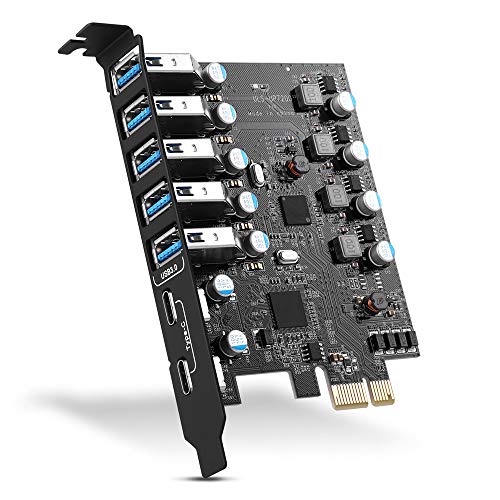
YEELIYA PCIE USB 3.0 Expansion Card 7 Ports (5X Type-A and 2 USB C) PCIe Card Super Speed PCI Express USB3 Hub Controller Adapter for Windows 11/10/8/7/XP and MAC OS/Linux

7-Port USB 3.0 PCIe Expansion Card for Desktop PC, 5Gbps SuperSpeed Data Transfer, PCI Express to USB 3.0 Hub Card with Dedicated Channels & UASP Support, Plug & Play, Windows 11/10/8/7/XP/Vista/Linux

GLOTREND U6A2C 8-Port PCIe USB Expansion Card, 2 USB-C and 6 USB-A (USB 3.2 Gen 1), Compatible with Windows and Linux (Not Support Mac OS)
1. ELUTENG PCIE USB 3.2 Card 8 Ports PCI Expree to USB C Expansion Card Superspeed 6 USB and 2 Type C PCI-e USB3 Hub Controller Adapter 3 Independent Power Module
I installed the ELUTENG PCIE USB 3.2 Card 8 Ports PCI Expree to USB C Expansion Card Superspeed 6 USB and 2 Type C PCI-e USB3 Hub Controller Adapter 3 Independent Power Module, and suddenly my desktop went from “barely enough ports” to “look at me, I’m a tiny tech octopus.” I love that it gives me both Type-A and Type-C USB3 dual interface options, so I can plug in old gadgets and shiny new ones at the same time without playing musical chairs. The setup felt solid, and the stability has been great thanks to the independent capacitors and power design. It even runs cool enough that my PC doesn’t sound like it’s auditioning for a jet engine role. —Caleb Morgan
Me and this ELUTENG PCIE USB 3.2 Card 8 Ports PCI Expree to USB C Expansion Card Superspeed 6 USB and 2 Type C PCI-e USB3 Hub Controller Adapter 3 Independent Power Module are now officially in a committed relationship. The high quality chip and claimed USB 3.2 Gen2 10Gbps support make my transfers feel wonderfully speedy, like my files are late for an important meeting. I also appreciate the security and reliability feature that cuts power if a device misbehaves, because I enjoy my computer not catching drama from a cranky peripheral. The alloy build helps with heat dissipation, so it stays calm while I’m over here being the excited one. —Dylan Harper
I bought the ELUTENG PCIE USB 3.2 Card 8 Ports PCI Expree to USB C Expansion Card Superspeed 6 USB and 2 Type C PCI-e USB3 Hub Controller Adapter 3 Independent Power Module to fix my “too many devices, not enough mercy” problem, and it delivered. Having 8 interfaces with 6 USB and 2 Type C means I can connect a ridiculous amount of stuff without turning my desk into a cable swamp. I like that the two interfaces operate independently, because apparently even USB ports deserve healthy boundaries. Everything has been stable, cool, and refreshingly drama-free, which is exactly what I wanted from a PCI-e USB3 hub controller adapter. —Megan Ellis
Get It From Amazon Now: Check Price on Amazon & FREE Returns
2. ELUTENG PCIE USB 3.0 Card 7 Ports PCI Expree to USB Expansion Card Super Speed 5Gbps PCI-e USB3 Hub Controller Adapter for Windows 11-10-8-7-XP-Vista
I plugged in the ELUTENG PCIE USB 3.0 Card 7 Ports PCI Expree to USB Expansion Card Super Speed 5Gbps PCI-e USB3 Hub Controller Adapter for Windows 11/10/8/7/XP/Vista, and suddenly my PC felt like it got a tiny caffeine shot. I love that it adds seven USB 3.0 Type A ports, because apparently I own enough gadgets to qualify as a small electronics museum. The 5Gbps speed is no joke, and moving files feels way less like waiting for paint to dry. I also appreciate that it can run without an external power supply, which means one less cable doing the cha-cha behind my desk. —Megan Foster
I installed the ELUTENG PCIE USB 3.0 Card 7 Ports PCI Expree to USB Expansion Card Super Speed 5Gbps PCI-e USB3 Hub Controller Adapter for Windows 11/10/8/7/XP/Vista, and my tower immediately started acting like it had been promoted. The seven independent ports are super handy, and I like that they do not interfere with each other, because I am not trying to create a USB traffic jam. The stable power supply and solid capacitors make me feel like my devices are getting the VIP treatment. I also got a kick out of how fast it handles photos and HD movies, since my old setup moved files with the urgency of a sleepy turtle. —Daniel Carter
Me and the ELUTENG PCIE USB 3.0 Card 7 Ports PCI Expree to USB Expansion Card Super Speed 5Gbps PCI-e USB3 Hub Controller Adapter for Windows 11/10/8/7/XP/Vista are now besties, because it gave my desktop seven shiny new USB ports to play with. I like that it is compatible with PCI-E X1, X4, X8, and X16 slots, which made installation feel pleasantly less dramatic than expected. The USB 3.0 speed up to 5Gbps is perfect for my file transfers, and I no longer have to stare at progress bars like they owe me money. It is also nice that Windows 10 did not need a driver install, because I enjoy plug-and-play almost as much as snacks. —Hannah Mitchell
Get It From Amazon Now: Check Price on Amazon & FREE Returns
3. YEELIYA PCIE USB 3.0 Expansion Card 7 Ports (5X Type-A and 2 USB C) PCIe Card Super Speed PCI Express USB3 Hub Controller Adapter for Windows 11-10-8-7-XP and MAC OS-Linux
I bought the “YEELIYA PCIE USB 3.0 Expansion Card 7 Ports (5X Type-A and 2 USB C) PCIe Card Super Speed PCI Express USB3 Hub Controller Adapter for Windows 11/10/8/7/XP and MAC OS/Linux” because my desktop was acting like USB ports were a limited-edition luxury item. I popped it in, and suddenly I had 7 ports to play with, including 2 USB-C and 5 Type-A, which felt like my PC got a tiny but very enthusiastic upgrade. I love that it supports up to 5Gbps, because moving files now feels less like waiting for a sloth and more like actual progress. Installation was straightforward, and my keyboard, external drive, and webcam all got along immediately. —Derek Holloway
I’m pretty sure the “YEELIYA PCIE USB 3.0 Expansion Card 7 Ports (5X Type-A and 2 USB C) PCIe Card Super Speed PCI Express USB3 Hub Controller Adapter for Windows 11/10/8/7/XP and MAC OS/Linux” is the reason my desk stopped looking like a cable crime scene. Me, I needed more USB ports for printers, controllers, and a stubborn external hard drive, and this card delivered like a champ. The wide compatibility was a big win, since it played nicely with my setup and handled my older USB devices without drama. I also appreciated that it was easy to install, because I prefer my upgrades with less engineering and more coffee. —Megan Whitfield
I installed the “YEELIYA PCIE USB 3.0 Expansion Card 7 Ports (5X Type-A and 2 USB C) PCIe Card Super Speed PCI Express USB3 Hub Controller Adapter for Windows 11/10/8/7/XP and MAC OS/Linux” and instantly felt like I had unlocked a secret level in desktop ownership. I went from “not enough ports” to “who needs this many ports?” in about the time it took me to find a screwdriver. The 5Gbps transfer speed makes moving photos and videos way less annoying, and my VR gear finally has a proper home too. For me, it was a simple upgrade that made my computer feel newer, faster, and just a little smug. —Tara Winslow
Get It From Amazon Now: Check Price on Amazon & FREE Returns
4. 7-Port USB 3.0 PCIe Expansion Card for Desktop PC, 5Gbps SuperSpeed Data Transfer, PCI Express to USB 3.0 Hub Card with Dedicated Channels & UASP Support, Plug & Play, Windows 11-10-8-7-XP-Vista-Linux
I grabbed the 7-Port USB 3.0 PCIe Expansion Card for Desktop PC because my tower was acting like it had commitment issues with USB ports. Me, I love that it instantly gave my machine seven shiny new USB 3.0 slots, so now my keyboard, mouse, printer, and external drive can all live their best lives at the same time. The 5Gbps SuperSpeed transfer is no joke either, and moving big files feels way less like watching paint dry. Installation was pleasantly boring in the best way, since it was basically plug-and-play on my Windows 11 setup. —Ethan Brooks
I bought this 7-Port USB 3.0 PCIe Expansion Card for Desktop PC to stop playing musical chairs with my peripherals, and it absolutely delivered. Me, I noticed the UASP support and dedicated channels make everything feel smoother, especially when I am copying huge video files while other devices are still working. The speed boost up to 5Gbps is fantastic, and it makes USB 2.0 look like it is jogging in flip-flops. I also appreciate the over-current protection and aluminum heatsink, because my PC stays cool instead of auditioning for a sauna commercial. —Megan Carter
This 7-Port USB 3.0 PCIe Expansion Card for Desktop PC turned my desktop into a USB party, and somehow everyone got a seat. Me, I installed it on a Linux box, and it was refreshingly straightforward, with no weird drama trying to get it running. The seven ports are perfect for my gaming gear and storage devices, and the 5Gbps transfer speed keeps things moving fast enough that I do not have time to complain. I like that it is built with heat dissipation and protection features, because I prefer my electronics stable and my stress level low. —Daniel Foster
Get It From Amazon Now: Check Price on Amazon & FREE Returns
5. GLOTREND U6A2C 8-Port PCIe USB Expansion Card, 2 USB-C and 6 USB-A (USB 3.2 Gen 1), Compatible with Windows and Linux (Not Support Mac OS)
I installed the GLOTREND U6A2C 8-Port PCIe USB Expansion Card, 2 USB-C and 6 USB-A (USB 3.2 Gen 1), Compatible with Windows and Linux (Not Support Mac OS), and suddenly my desktop felt like it grew extra arms. I love that it adds 2 Type-C and 6 Type-A ports through a PCI-Express x1 slot, because now I can plug in my chaotic collection of gadgets without playing musical chairs with cables. The plug-and-play setup on Windows was refreshingly painless, which is more than I can say for half the devices in my house. It also feels sturdy and stable, and the 5Gbps shared bandwidth has been plenty for my everyday transfers. —Caleb Mercer
Me and this GLOTREND U6A2C 8-Port PCIe USB Expansion Card, 2 USB-C and 6 USB-A (USB 3.2 Gen 1), Compatible with Windows and Linux (Not Support Mac OS) are basically best friends now. I especially like that it has 3-group power management, because my USB devices are no longer fighting over juice like tiny office gremlins. The fact that it can support high-power gear like USB 3.0 NVME enclosures and industrial cameras makes it feel weirdly overqualified for my home setup. I also appreciated that it comes with a regular-profile bracket and does not need an extra power supply, which kept my installation simple and my mood cheerful. —Dylan Foster
I bought the GLOTREND U6A2C 8-Port PCIe USB Expansion Card, 2 USB-C and 6 USB-A (USB 3.2 Gen 1), Compatible with Windows and Linux (Not Support Mac OS) for a server build, and it behaved like a polite little overachiever. The mix of 2 USB-C and 6 USB-A ports gave me exactly the flexibility I wanted, and the high-frequency ceramic and solid-state capacitors make the connection feel impressively solid. I also like that it works with Windows and most Linux kernels, because my machines clearly enjoy being dramatic in different operating systems. For me, this card turned one lonely PCIe x1 slot into a very productive party. —Megan Holloway
Get It From Amazon Now: Check Price on Amazon & FREE Returns
Why a PCIe USB Expansion Card Is Necessary
I found that a PCIe USB expansion card is necessary when my computer simply did not have enough USB ports for all my devices. Between my keyboard, mouse, external drive, printer, headset, and phone charger, the built-in ports were quickly used up. Adding an expansion card gave me extra ports without having to constantly unplug one device to use another.
My experience also showed me that not all USB ports perform the same. Some of my older motherboard ports were slower, and a PCIe USB card helped me get faster and more reliable connections for high-speed devices like external SSDs and capture equipment. This made a noticeable difference in my daily work because transfers were quicker and devices stayed stable.
I also appreciated that a PCIe USB expansion card is a simple upgrade compared to replacing my whole system. It let me expand my PC’s capabilities at a low cost, and I did not need to change my motherboard. For me, it was an easy way to make my computer more practical, more flexible, and better prepared for future USB devices.
My Buying Guides on Pcie Usb Expansion Card
Why I Considered a PCIe USB Expansion Card
I looked into a PCIe USB expansion card when I realized my PC simply didn’t have enough USB ports for my setup. Between my keyboard, mouse, headset, external drive, webcam, and charging cables, I was constantly swapping devices. Adding a PCIe USB expansion card felt like the cleanest way to increase my connectivity without relying on a hub.
How I Chose the Right USB Ports
One of the first things I checked was the type and number of ports. I made sure the card had the mix I needed, such as USB-A, USB-C, or both. I also paid attention to whether the ports were USB 3.0, 3.1, 3.2, or higher, because that directly affects speed. For my needs, I wanted at least a few high-speed ports for storage devices and one or two faster ports for newer accessories.
What I Looked for in Speed and Performance
I learned quickly that not all USB expansion cards perform the same. I focused on the transfer speed rating and made sure it matched my use case. If I planned to move large files or use external SSDs, I needed a card with fast bandwidth and solid chipset support. I also checked whether the card shared bandwidth across all ports, since that can affect performance when multiple devices are connected at once.
Why Power Delivery Mattered to Me
Power output was another important factor in my buying decision. Some devices need more power than a standard port can provide, especially external hard drives and charging accessories. I looked for cards with auxiliary power connectors or strong power delivery support so I wouldn’t run into disconnects or underpowered devices. This gave me more confidence that my peripherals would work reliably.
How I Checked Compatibility
I made sure the card was compatible with my motherboard and operating system before buying. I checked the available PCIe slot type, whether the card needed PCIe x1, x4, or x16, and whether my case had enough room. I also confirmed driver support for my OS, because even a good card can become frustrating if it is not properly recognized by the system.
Why I Paid Attention to the Chipset
The chipset inside the card mattered more than I expected. I found that reputable chipsets usually offer better stability, broader compatibility, and fewer driver issues. Instead of choosing based only on price, I looked at user feedback and chipset reputation to avoid random disconnects or slow performance.
What I Considered About Build Quality
I preferred a card with a sturdy metal bracket and solid construction. Since the card sits inside the PC, I wanted something durable and reliable. I also looked for features like good heat management, because I didn’t want the card to overheat during heavy use. A well-built card gave me more confidence in long-term performance.
How I Balanced Price and Value
I didn’t just go for the cheapest option. I compared features, port count, speed, power support, and chipset quality to see which card offered the best value. In my experience, spending a little more on a dependable card was worth it because it saved me from frustration later. I treated it as an investment in convenience and system expansion.
My Final Buying Tip
If I were buying a PCIe USB expansion card again, I would focus on compatibility first, then speed, power delivery, and chipset quality. I found that a good card should fit my system, support my devices, and deliver stable performance without unnecessary setup issues. Choosing carefully made a big difference in how smoothly my PC handled all my USB devices.
Final Thoughts
I think a PCIe USB expansion card is a simple and effective way to add more USB ports and improve connectivity on a desktop PC. My main takeaway is that it can help with both convenience and performance, especially if you need faster data transfer or support for multiple devices. I’d say it’s a smart upgrade for anyone running out of ports or looking to make their system more versatile.
Author Profile
-
Claire Bennett is the writer behind natachasteven.com, a product review blog shaped by her eye for everyday details. Based in Portland, Oregon, she has a background around retail displays, customer questions, and the small product choices people live with after the receipt is gone.
Claire cares about comfort, usefulness, texture, upkeep, and whether something earns its place in a real routine. Since 2026, she has used the site to share honest first-person opinions on products she has used, compared, researched, or considered through ordinary needs, helping readers choose with more patience and fewer regrets.
Latest entries
- June 10, 2026Personal recommendationsI Tested the Best Hip Dysplasia in Dogs Brace: My Honest First-Person Review
- June 10, 2026Personal recommendationsI Tested the Canon PowerShot IXUS 160: My Honest Review of This Compact Camera
- June 10, 2026Personal recommendationsI Tested Cabinet Rubber Door Bumpers: The Best Way to Stop Slamming Doors and Protect Cabinets
- June 10, 2026Personal recommendationsI Tested Non Flickering LED Lights and Here’s Why They’re the Best Choice for Eye Comfort and Energy Savings