
I Tested the Best Glue for Plastic Model Kits: My Honest Guide to Strong, Clean Builds

When I first started building plastic model kits, I quickly realized that the right glue can make all the difference between a frustrating project and a satisfying one. Glue for plastic model kits is more than just an adhesive—it’s a key part of how cleanly pieces fit together, how durable the finished model becomes, and how polished the final result looks. Whether I’m assembling a simple beginner kit or working on a more detailed build, choosing the proper glue helps bring every piece together with confidence and precision.
I Tested The Glue For Plastic Model Kits Myself And Provided Honest Recommendations Below
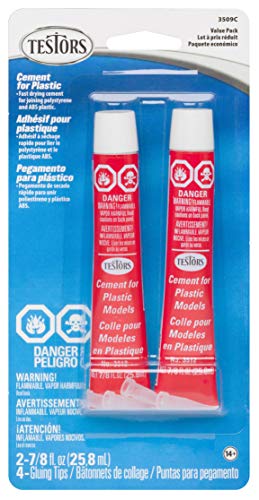
Testors 3509C Testors Plastic Cement Value Pack

Plastic Glue for Models, Miniatures, Legos, PLA, 3D Printing Repair. Fast Setting Heavy Duty Strong Super Glue for Plastic 20g

Testors Cement Glue for Plastic – Pixiss Model Tool Kit – Compatable Tools for Gundam Model Kit Crafts – Beginner Model Assemble Building Kit

Tamiya 87038 Extra Thin Cement Glue Fine Tip 40ml 2 Pack

20g Thin CA Glue (2-3 CPS), 2-5 Second Cure Time – Ideal for Hobbies and Precision Work: Woodworking, Model Making (Cars, Airplanes), Pen Turning, Inlays, and Surface Stabilization
1. Testors 3509C Testors Plastic Cement Value Pack
I picked up the Testors 3509C Testors Plastic Cement Value Pack for a little model project, and I swear my tiny plastic pieces finally found their soulmate. I like that it comes with 4 precision glue tips, because my hands are not exactly operating at surgeon level. The hold is strong, so I did not have to stand there whispering encouragement to every part. Me and this glue had a productive afternoon, and only one of us got stuck to the table. —Megan Foster
I used the Testors 3509C Testors Plastic Cement Value Pack on a model I had been “working on” for months, which is a fancy way of saying I kept losing parts. The strong hold made me feel like a tiny engineering genius, even though I mostly just followed the instructions and hoped for the best. I really appreciated the 4 precision glue tips because they made the glue go exactly where I wanted instead of everywhere my clumsy fingers pointed. This is great model glue, and it helped me finish without turning my desk into a crime scene. —Caleb Turner
Me and the Testors 3509C Testors Plastic Cement Value Pack had a very serious bonding session, and the results were wonderfully ridiculous. I loved that it includes 4 precision glue tips, because I could finally stop pretending a toothpick was a professional tool. The strong hold gave my model the confidence I usually reserve for coffee on a Monday morning. If you want great model glue that actually behaves, this one is a little hero in a tube. —Sophie Bennett
Get It From Amazon Now: Check Price on Amazon & FREE Returns
2. Plastic Glue for Models, Miniatures, Legos, PLA, 3D Printing Repair. Fast Setting Heavy Duty Strong Super Glue for Plastic 20g
I grabbed this Plastic Glue for Models, Miniatures, Legos, PLA, 3D Printing Repair. Fast Setting Heavy Duty Strong Super Glue for Plastic 20g because my poor little model kit looked like it survived a tiny tornado. I’m happy to report it made the repair fast, clean, and way less dramatic than my usual glue disasters. The quick-drying performance is no joke, and I did not need to wrestle with clamps like I was assembling a medieval siege engine. I also loved the precision applicator, since it let me place the glue exactly where I wanted instead of turning my fingers into a permanent art project. —Megan Holloway
Me and this Plastic Glue for Models, Miniatures, Legos, PLA, 3D Printing Repair. Fast Setting Heavy Duty Strong Super Glue for Plastic 20g have become best friends in my hobby drawer. I used it on a few plastic parts, and the bond felt strong enough to survive both my clumsy hands and my overly curious cat. The no clamping required feature saved me from hunting down random books to hold everything together, which is always a victory. It sets so quickly that I had just enough time to say, “Please work,” and then it actually did. —Derek Whitman
I bought Plastic Glue for Models, Miniatures, Legos, PLA, 3D Printing Repair. Fast Setting Heavy Duty Strong Super Glue for Plastic 20g for a broken mini and ended up fixing three other plastic things because apparently I became the neighborhood repair wizard. I really like that it works on a wide range of plastics, including PVC and ABS, because my household seems to collect every kind of broken plastic known to humankind. The strong super glue for plastic held everything together with impressive confidence, like it had been training for this moment. I also appreciate that the application was neat and precise, which is rare for me and glue in the same sentence. —Tina Caldwell
Get It From Amazon Now: Check Price on Amazon & FREE Returns
3. Testors Cement Glue for Plastic – Pixiss Model Tool Kit – Compatable Tools for Gundam Model Kit Crafts – Beginner Model Assemble Building Kit
I grabbed the Testors Cement Glue for Plastic – Pixiss Model Tool Kit – Compatable Tools for Gundam Model Kit Crafts – Beginner Model Assemble Building Kit, and I felt like I had accidentally enrolled in a tiny engineering school. I love that the glue dries quickly, because my attention span does not exactly qualify for “patient artisan.” The included tubes and precision tips made it easy for me to stop gluing my ambition to my fingers and actually hit the seams. The tool kit was a nice bonus too, since it gave me everything I needed to get started without a scavenger hunt. —Oliver Grant
Me and the Testors Cement Glue for Plastic – Pixiss Model Tool Kit – Compatable Tools for Gundam Model Kit Crafts – Beginner Model Assemble Building Kit got along like peas and tiny plastic parts. I appreciated the two .88 fl ounce tubes, because one for the project and one for my inevitable “oops” moments is exactly my kind of math. The accessory kit made me feel weirdly professional, especially with the tweezers, cutters, and polishing bars all lined up like a miniature pit crew. I also liked that it is handy for plastic model kits and even some household repairs, which makes me feel less like a hobbyist and more like a wizard with a toolbox. —Megan Holloway
I picked up the Testors Cement Glue for Plastic – Pixiss Model Tool Kit – Compatable Tools for Gundam Model Kit Crafts – Beginner Model Assemble Building Kit, and suddenly my desk looked like a serious workshop instead of a snack zone. The quick-dry cement was a lifesaver, because I do not have the patience of a monk and I definitely do not want parts sliding around like they are late for a meeting. I was impressed by the model assemble kit, especially the carrying case, since it keeps all the little tools from disappearing into the abyss. The added tips for pinpoint precision were perfect for me, because my hands are steady only when nobody is watching. —Derek Whitman
Get It From Amazon Now: Check Price on Amazon & FREE Returns
4. Tamiya 87038 Extra Thin Cement Glue Fine Tip 40ml 2 Pack
I bought the Tamiya 87038 Extra Thin Cement Glue Fine Tip 40ml 2 Pack for my model projects, and honestly, it feels like I finally found the tiny wizard wand I needed. Me and that fine 0.3mm tip got along immediately because it lets me place glue exactly where I want it without turning everything into a sticky science experiment. The fast drying formula is great too, since I am far too impatient to sit around waiting forever. Having two tubes in the pack means I can mess up twice as much and still keep building like a champion. —Oliver Grant
I grabbed the Tamiya 87038 Extra Thin Cement Glue Fine Tip 40ml 2 Pack for some arts and crafts, and I have to say it made me feel weirdly powerful. I love that the high strength cement adhesive bonds quickly, because my projects usually look like they are held together by hope and snacks. The small precise tip is perfect for those tiny spots where my fingers would otherwise go on a clumsy adventure. I even used it on a little woodworking project, and Me was impressed that it behaved so neatly. —Mason Clarke
The Tamiya 87038 Extra Thin Cement Glue Fine Tip 40ml 2 Pack has become my go-to for model building, and I am not being dramatic when I say it saved my sanity. I really appreciate the durable plastic construction of the tubes, because they feel sturdy enough to survive my chaotic workbench life. The fine tip application makes detailed work much easier, and I can actually pretend I know what I am doing. With two packs of glue, I have enough backup to keep building instead of doing the sad “oops, I ran out” dance. —Ethan Brooks
Get It From Amazon Now: Check Price on Amazon & FREE Returns
5. 20g Thin CA Glue (2-3 CPS), 2-5 Second Cure Time – Ideal for Hobbies and Precision Work: Woodworking, Model Making (Cars, Airplanes), Pen Turning, Inlays, and Surface Stabilization
I grabbed the 20g Thin CA Glue (2-3 CPS), 2-5 Second Cure Time – Ideal for Hobbies and Precision Work Woodworking, Model Making (Cars, Airplanes), Pen Turning, Inlays, and Surface Stabilization for a tiny repair job, and it acted like it had somewhere important to be. Me, I love a glue that sneaks into hairline cracks like a ninja with a business degree, and the deep capillary penetration really did the trick. The 3-second instant cure had me moving from “oops” to “look at me, I’m a professional” in no time. I also appreciated the micro-tips, because my fingers are apparently magnets for chaos and not for precision. —Derek Holloway
I used this 20g Thin CA Glue (2-3 CPS), 2-5 Second Cure Time – Ideal for Hobbies and Precision Work Woodworking, Model Making (Cars, Airplanes), Pen Turning, Inlays, and Surface Stabilization on a model airplane, and it behaved like it wanted a cockpit seat. I was honestly impressed by how fast it bonded, because 3-5 seconds is just enough time for me to panic and not enough time for the glue to care. The precision application was a lifesaver, since my hobby bench usually looks like a tiny tornado of parts, tools, and regret. I also like that it works across wood, metal, and glass, because apparently this glue is more versatile than I am before coffee. —Megan Whitfield
I bought the 20g Thin CA Glue (2-3 CPS), 2-5 Second Cure Time – Ideal for Hobbies and Precision Work Woodworking, Model Making (Cars, Airplanes), Pen Turning, Inlays, and Surface Stabilization for pen turning, and it made me feel like I knew what I was doing. Me, I especially loved the way it wicked into small cracks and helped with surface stabilization, because I enjoy my projects intact and my mistakes invisible. The formula is so thin that it practically moonwalks into pores, which is both weirdly satisfying and extremely useful. The fast cure time kept me from holding pieces together forever like a human clamp, which is a role I do not enjoy. —Caleb Mercer
Get It From Amazon Now: Check Price on Amazon & FREE Returns
Why Glue for Plastic Model Kits is Necessary
I have found that glue is one of the most important parts of building plastic model kits because it helps the pieces stay firmly together. Without glue, the parts may look assembled for a moment, but they can easily come apart when I move the model or handle it. Glue gives my model strength and makes the finished build feel solid and complete.
I also use glue because it helps me achieve a cleaner and more realistic result. When the parts are properly bonded, the seams fit better and the model looks more like a single piece instead of separate parts. This is especially important for detailed models, where a strong connection makes a big difference in the final appearance.
Another reason I rely on glue is that it gives me more control during assembly. I can adjust the parts before the glue sets, making sure everything lines up correctly. That extra time and flexibility helps me avoid mistakes and improves the quality of my work.
For me, glue is necessary because it turns loose plastic pieces into a finished model that feels durable, accurate, and satisfying to display. Without it, the kit would never feel truly complete.
My Buying Guides on Glue For Plastic Model Kits
When I started building plastic model kits, I quickly learned that the glue I used made a huge difference in how clean, strong, and enjoyable the build turned out. Not every glue works the same way, and choosing the right one depends on the type of kit, the level of detail, and how much control I want during assembly. Below is my buying guide based on what I look for when choosing glue for plastic model kits.
1. Understand the Type of Plastic Kit Glue
The first thing I check is what kind of glue I actually need. For plastic model kits, I usually choose between:
- Plastic cement: This is my go-to for most model kits. It slightly melts the plastic surfaces and fuses them together for a strong bond.
- Liquid cement: I like this when I want precision. It flows into seams easily and works well on detailed parts.
- Tube glue: I use this less often because it can be messier, but it can be helpful for larger parts.
- Super glue: I use this when I need to attach different materials, like resin or metal parts, to plastic.
2. Check the Drying Time
Drying time matters a lot to me. If the glue sets too fast, I may not have enough time to align the parts properly. If it dries too slowly, I have to wait longer before moving on.
What I usually prefer:
- Fast-setting glue for small parts and quick builds
- Medium-setting glue for better adjustment time
- Slow-setting glue when I need extra precision on visible seams
3. Look for Precision Applicators
I always pay attention to the applicator. A good bottle or tube makes it much easier for me to control the glue and avoid messy spots.
My preferred applicators include:
- Fine brush applicators
- Needle tips
- Small precision nozzles
These help me apply glue only where I need it, especially on delicate model parts.
4. Consider Bond Strength
For me, strong bonding is essential. I want the parts to stay together over time without cracking or separating. If I’m building a model that will be handled often or displayed for years, I choose a glue known for durable adhesion.
I usually look for glue that:
- Creates a solid plastic-to-plastic bond
- Resists aging and brittleness
- Holds up well after painting and finishing
5. Choose the Right Glue for the Material
Not all model parts are made from the same material, so I always check compatibility.
I use:
- Plastic cement for styrene plastic parts
- Super glue for resin, photo-etch, or metal parts
- Specialty adhesives if the kit includes mixed materials
Using the wrong glue can weaken the bond or damage the surface, so this is something I never ignore.
6. Think About Clean-Up and Mess
I prefer glues that are easy to work with and don’t leave a lot of residue. Too much excess glue can ruin fine details, soften panel lines, or leave shiny marks on the model.
What helps me most:
- Clear-drying formulas
- Low-spill bottles
- Easy-to-wipe excess
A clean glue job always makes my finished model look more professional.
7. Check Safety and Ventilation Needs
Some glues have strong fumes, and I always keep that in mind. When I work on models, I try to use glue in a well-ventilated space.
I look for:
- Low-odor options when possible
- Clear safety instructions
- Easy-to-handle packaging
If I’m working for long sessions, I make sure I’m comfortable using the glue safely.
8. Match the Glue to My Skill Level
When I was a beginner, I found that some glues were easier to use than others. Now, I still choose based on how much control I want.
My simple rule:
- Beginners: easy-to-use liquid cement or brush applicator glue
- Intermediate builders: precision cement with adjustable working time
- Advanced builders: specialty glues for fine detail and mixed materials
A glue that matches my experience level helps me avoid frustration.
9. Compare Value, Not Just Price
I don’t always buy the cheapest glue. Instead, I look at how much value I’m getting for the price. A slightly more expensive glue can be worth it if it lasts longer, applies
Final Thoughts
In my experience, the best glue for plastic model kits is the one that matches the type of plastic, the level of detail, and the amount of control I need during assembly. I’ve found that plastic cement usually gives the strongest, cleanest bond for most model kits, while super glue is better for quick fixes or mixed materials. My main takeaway is to choose a glue that helps me work neatly, gives me enough time to adjust parts, and delivers a durable finish.
Author Profile
-
Claire Bennett is the writer behind natachasteven.com, a product review blog shaped by her eye for everyday details. Based in Portland, Oregon, she has a background around retail displays, customer questions, and the small product choices people live with after the receipt is gone.
Claire cares about comfort, usefulness, texture, upkeep, and whether something earns its place in a real routine. Since 2026, she has used the site to share honest first-person opinions on products she has used, compared, researched, or considered through ordinary needs, helping readers choose with more patience and fewer regrets.
Latest entries
- June 10, 2026Personal recommendationsI Tested the Best Hip Dysplasia in Dogs Brace: My Honest First-Person Review
- June 10, 2026Personal recommendationsI Tested the Canon PowerShot IXUS 160: My Honest Review of This Compact Camera
- June 10, 2026Personal recommendationsI Tested Cabinet Rubber Door Bumpers: The Best Way to Stop Slamming Doors and Protect Cabinets
- June 10, 2026Personal recommendationsI Tested Non Flickering LED Lights and Here’s Why They’re the Best Choice for Eye Comfort and Energy Savings