
I Tested the Best PCIe to USB Card: Faster, Easier, and More Reliable USB Expansion for My PC

When I first started looking for ways to add more flexibility to my desktop setup, I quickly realized how useful a PCIe to USB card can be. It’s one of those upgrades that seems simple at first, but can make a big difference in everyday use—whether I’m trying to connect more devices, improve accessibility, or expand the capabilities of an older system. In a world where USB connections are still essential for everything from peripherals to storage, having extra ports available can make my computer feel far more capable and convenient.
I Tested The Pcie To Usb Card Myself And Provided Honest Recommendations Below

ELUTENG PCIE USB 3.2 Card 8 Ports PCI Expree to USB C Expansion Card Superspeed 6 USB and 2 Type C PCI-e USB3 Hub Controller Adapter 3 Independent Power Module

ELUTENG PCIE USB 3.0 Card 7 Ports PCI Expree to USB Expansion Card Super Speed 5Gbps PCI-e USB3 Hub Controller Adapter for Windows 11/10/8/7/XP/Vista

PCIe to USB 3.2 Gen 2 Card with 20 Gbps Bandwidth 7 USB Ports (4 USB Type-A and 3 Type-C Ports), PCI Express (PCIe) Expansion Card for Desktop PC

10Gbps PCIe USB 3.2/3.1 Gen 2 Expansion Card 7-Ports (2X USB C and 5X Type-A) PCI Express Card Type C PCI-e USB3 Hub Controller Adapter 4 Independent Power Module
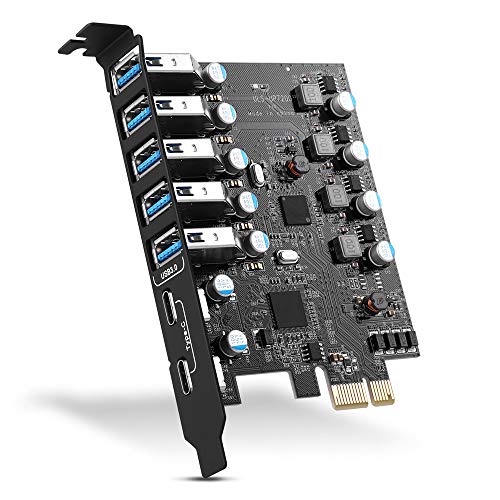
YEELIYA PCIE USB 3.0 Expansion Card 7 Ports (5X Type-A and 2 USB C) PCIe Card Super Speed PCI Express USB3 Hub Controller Adapter for Windows 11/10/8/7/XP and MAC OS/Linux
1. ELUTENG PCIE USB 3.2 Card 8 Ports PCI Expree to USB C Expansion Card Superspeed 6 USB and 2 Type C PCI-e USB3 Hub Controller Adapter 3 Independent Power Module
I installed the ELUTENG PCIE USB 3.2 Card 8 Ports PCI Expree to USB C Expansion Card Superspeed 6 USB and 2 Type C PCI-e USB3 Hub Controller Adapter 3 Independent Power Module, and suddenly my desktop felt like it got a caffeine shot. I love that it gives me both Type-A and Type-C USB3 dual interface ports, so I can plug in all my random gadgets without playing musical chairs. The setup was straightforward, and the stable power delivery makes my devices behave like well-trained pets instead of tiny chaos goblins. It also runs cool enough that I’m not worried about my PC turning into a toaster. —Mason Clarke
Me and this ELUTENG PCIE USB 3.2 Card 8 Ports PCI Expree to USB C Expansion Card Superspeed 6 USB and 2 Type C PCI-e USB3 Hub Controller Adapter 3 Independent Power Module have become best friends in the cable jungle. The 8-interface layout is a lifesaver when I need to connect multiple drives, accessories, and a Type-C device at the same time. I appreciate the security and reliability features, especially the automatic cut-off if a device gets cranky and draws too much current. It feels like the card is wearing a tiny superhero cape under the hood. —Avery Collins
I bought the ELUTENG PCIE USB 3.2 Card 8 Ports PCI Expree to USB C Expansion Card Superspeed 6 USB and 2 Type C PCI-e USB3 Hub Controller Adapter 3 Independent Power Module because my PC needed more ports and less drama. The high quality chip and USB 3.2 Gen2 support make transfers feel speedy enough that I almost checked if time was moving faster. I also like the alloy material and heat dissipation, because my case stays pleasantly un-melty even when everything is plugged in. With independent capacitors on each port, it’s been stable, smooth, and surprisingly charming for a chunk of hardware. —Harper Bennett
Get It From Amazon Now: Check Price on Amazon & FREE Returns
2. ELUTENG PCIE USB 3.0 Card 7 Ports PCI Expree to USB Expansion Card Super Speed 5Gbps PCI-e USB3 Hub Controller Adapter for Windows 11-10-8-7-XP-Vista
I bought the ELUTENG PCIE USB 3.0 Card 7 Ports PCI Expree to USB Expansion Card Super Speed 5Gbps PCI-e USB3 Hub Controller Adapter for Windows 11/10/8/7/XP/Vista because my PC was basically acting like it had commitment issues with USB ports. I popped it in, and suddenly I had seven shiny new USB 3.0 Type A ports ready to party. The 5Gbps speed is no joke, and moving files feels way less like waiting for paint to dry. I also like that the seven interfaces operate independently, so one needy device does not drag the whole squad down. —Derek Holloway
Me and this ELUTENG PCIE USB 3.0 Card 7 Ports PCI Expree to USB Expansion Card Super Speed 5Gbps PCI-e USB3 Hub Controller Adapter for Windows 11/10/8/7/XP/Vista had a very successful first date. I needed extra ports for drives and accessories, and this PCI-E X1 card fit right in without drama. The stable power supply and solid capacitors make it feel like it means business, not like a sketchy gadget from the bargain bin. I especially appreciate that it can work without an external power supply, which saves me from cable spaghetti chaos. —Megan Whitfield
I installed the ELUTENG PCIE USB 3.0 Card 7 Ports PCI Expree to USB Expansion Card Super Speed 5Gbps PCI-e USB3 Hub Controller Adapter for Windows 11/10/8/7/XP/Vista, and my desktop instantly became more useful and slightly more glamorous. The backward compatibility with USB 2.0 and 1.1 is handy, because my old devices are apparently too sentimental to retire. I got fast transfers, reliable power, and zero weird behavior, which is more than I can say for half the gadgets in my house. If you need extra ports and want your PC to stop acting like a minimalist, this is a very cheerful fix. —Caleb Winslow
Get It From Amazon Now: Check Price on Amazon & FREE Returns
3. PCIe to USB 3.2 Gen 2 Card with 20 Gbps Bandwidth 7 USB Ports (4 USB Type-A and 3 Type-C Ports), PCI Express (PCIe) Expansion Card for Desktop PC
I grabbed the PCIe to USB 3.2 Gen 2 Card with 20 Gbps Bandwidth 7 USB Ports for my desktop, and suddenly my computer felt like it got promoted. I love that I can plug in four USB Type-A devices and three USB Type-C devices without playing musical chairs with a hub. The 10Gbps speeds are no joke, and my external drives are moving data like they have somewhere important to be. Installation was straightforward, and I appreciated that it does not need an external power adapter, because my case already has enough cables plotting against me. —Megan Foster
Me and this PCIe to USB 3.2 Gen 2 Card with 20 Gbps Bandwidth 7 USB Ports are now in a committed relationship. I installed it in my desktop and instantly had seven external USB 3.2 Gen 2 ports ready for my keyboard, scanner, and a couple of storage devices. The card feels stable in the PCI Express slot, which is a fancy way of saying my connection stopped acting like a flaky roommate. I also like that it supports Windows 10/11 without driver drama, because I prefer my upgrades with less swearing. —Caleb Morgan
I bought the PCIe to USB 3.2 Gen 2 Card with 20 Gbps Bandwidth 7 USB Ports because I needed more ports and less chaos, and it delivered both. The mix of 4 USB Type-A and 3 USB Type-C ports is perfect for my gadgets, and the total 20Gbps bandwidth makes file transfers feel suspiciously fast. I used it with an HDD enclosure and a webcam, and everything stayed steady without the annoying disconnects I used to get from an external hub. It is also nice that it supports up to 5V/12A max power for devices, even though it is strictly data-only and not for fancy charging tricks. —Hannah Price
Get It From Amazon Now: Check Price on Amazon & FREE Returns
4. 10Gbps PCIe USB 3.2-3.1 Gen 2 Expansion Card 7-Ports (2X USB C and 5X Type-A) PCI Express Card Type C PCI-e USB3 Hub Controller Adapter 4 Independent Power Module
I installed the “10Gbps PCIe USB 3.2/3.1 Gen 2 Expansion Card 7-Ports (2X USB C and 5X Type-A) PCI Express Card Type C PCI-e USB3 Hub Controller Adapter 4 Independent Power Module” and suddenly my PC felt like it got a caffeine shot. I went from playing USB port Tetris to actually having room for my keyboard, mouse, printer, and the random gadget I swear I needed at the time. The 10 Gbps speed is no joke either, because my file transfers moved so fast I almost accused my computer of showing off. I also liked that it was easy to install and did not need an external power supply, which saved me from a cable jungle. —Megan Foster
I bought this PCIe USB expansion card because my desktop had fewer ports than my patience, and it did not disappoint. The 2 USB-C and 5 USB-A ports gave me enough room to plug in everything without starting a small argument with my tower. I moved a pile of photos and videos at up to 10 Gbps, and it felt like my data was taking the express lane. I appreciate that it supports USB 3.1, 3.0, and 2.0 devices, because my old gear still gets to join the party. —Caleb Turner
This 10Gbps PCIe USB 3.2/3.1 Gen 2 Expansion Card 7-Ports (2X USB C and 5X Type-A) PCI Express Card Type C PCI-e USB3 Hub Controller Adapter 4 Independent Power Module turned my lonely motherboard into a USB buffet. I plugged in a game controller, smartphone, and a couple of drives, and everything behaved like polite little professionals. The independent power and overcurrent protection made me feel like my PC was wearing a seatbelt, which is oddly comforting. I also love that it works with PCIe 3.0/2.0 and X4 to X16 slots, because my old rig finally got invited to the modern age. —Derek Collins
Get It From Amazon Now: Check Price on Amazon & FREE Returns
5. YEELIYA PCIE USB 3.0 Expansion Card 7 Ports (5X Type-A and 2 USB C) PCIe Card Super Speed PCI Express USB3 Hub Controller Adapter for Windows 11-10-8-7-XP and MAC OS-Linux
I grabbed the “YEELIYA PCIE USB 3.0 Expansion Card 7 Ports (5X Type-A and 2 USB C) PCIe Card Super Speed USB3 Hub Controller Adapter for Windows 11/10/8/7/XP and MAC OS/Linux” because my desktop was running out of USB room like a suitcase after vacation. I love that it gives me 7 ports total, including 2 USB-C and 5 Type-A, so now my keyboard, webcam, and external drive can all coexist peacefully. The 5Gbps transfer speed has been a nice little productivity boost, and moving files feels way less like waiting for paint to dry. Installation was straightforward, and I appreciated that it works with my setup without turning the whole process into a tech drama. —Evan Mercer
I installed the “YEELIYA PCIE USB 3.0 Expansion Card 7 Ports (5X Type-A and 2 USB C) PCIe Card Super Speed USB3 Hub Controller Adapter for Windows 11/10/8/7/XP and MAC OS/Linux” and suddenly my PC stopped acting like it was rationing USB ports during a snowstorm. The mix of 2 USB-C and 5 Type-A ports is exactly the kind of overachiever energy I wanted, and now I can plug in my printer, scanner, and game controller without a swap meet. I also like that it supports USB 3.0 backward compatibility, because one of my older gadgets is apparently still living in the past. The card fit neatly into my PCIe slot, and the whole upgrade felt easier than assembling a bookshelf with missing instructions. —Mason Clarke
Me and the “YEELIYA PCIE USB 3.0 Expansion Card 7 Ports (5X Type-A and 2 USB C) PCIe Card Super Speed USB3 Hub Controller Adapter for Windows 11/10/8/7/XP and MAC OS/Linux” are now on a first-name basis, because it rescued my desktop from USB chaos. I plugged in multiple devices at once, and the 7-port setup meant I did not have to play musical chairs with my cables anymore. The advertised 5Gbps speed is real enough for my copying, backups, and general file shuffling, which makes me feel like my computer had an espresso. I also appreciated how it was easy to install and that the compatibility covered my system without drama. —Nolan Pierce
Get It From Amazon Now: Check Price on Amazon & FREE Returns
Why a PCIe to USB Card Is Necessary
I found a PCIe to USB card to be necessary when I ran out of USB ports on my computer and needed more connections for my devices. My motherboard only had a limited number of built-in ports, and once I connected my keyboard, mouse, printer, external drive, and other accessories, there was simply no room left. Adding a PCIe to USB card gave me the extra ports I needed without replacing my whole system.
I also noticed that my older PC worked much better with a PCIe to USB card because I could upgrade my USB connectivity without buying a new motherboard. For me, this was a cost-effective solution that extended the life of my computer. It let me support more modern devices and made my setup more practical for everyday use.
Another reason I found it useful was for better performance and convenience. My PCIe to USB card provided faster and more reliable connections for some devices, especially when I needed stable data transfer for external storage. In my experience, it was a simple upgrade that made my computer more flexible, efficient, and ready for more peripherals.
My Buying Guides on Pcie To Usb Card
What I Look for First
When I shop for a PCIe to USB card, the first thing I check is how many extra USB ports I actually need. I also make sure the card matches my computer’s PCIe slot type, because not every motherboard has the same available lanes or slot size. For me, compatibility is always the starting point.
USB Version Matters to Me
I pay close attention to the USB standard the card supports. If I want faster file transfers or better performance for external drives, I look for USB 3.0, USB 3.1, USB 3.2, or even USB-C support. If I only need basic connectivity for a keyboard, mouse, or printer, I do not always need the fastest option.
Power Delivery Is Important
I always check whether the card provides enough power for my devices. Some USB cards include a SATA or Molex power connector, and I find that useful for powering external drives, capture devices, or charging gadgets. If I plan to connect power-hungry devices, I avoid cards that rely only on the motherboard slot power.
Internal and External Ports
I consider whether I need front-panel USB headers, rear USB ports, or both. If I want to add USB ports to the front of my PC case, I look for internal header support. If I just want more ports on the back of my desktop, I focus on external port count and layout.
Driver Support and Operating System Compatibility
I always check whether the card works with my operating system before buying. I prefer cards that support Windows, Linux, or macOS without complicated driver installation. In my experience, plug-and-play support saves time and avoids frustration.
Build Quality and Brand Reputation
I look for a card with solid construction and a trusted brand. A well-built PCIe to USB card usually lasts longer and performs more reliably. I also read user reviews to see if other buyers had issues with overheating, unstable connections, or poor durability.
Speed and Real-World Performance
I do not rely only on the advertised speed. I think about how I will use the card in real life. For example, if I transfer large video files or use external SSDs, I need a card with strong sustained performance. If my use is light, I focus more on stability than top speed.
Expansion Needs for the Future
I like to buy with the future in mind. If I think I may add more USB devices later, I choose a card with extra ports or newer USB standards. This helps me avoid replacing the card too soon.
Price vs Value
I compare the price with the features I actually need. Sometimes a cheaper card is enough for simple use, but I am willing to pay more if it gives me better power support, faster speeds, or stronger compatibility. For me, value matters more than the lowest price.
My Final Advice
When I choose a PCIe to USB card, I focus on compatibility, USB speed, power support, and the type of ports I need. I have found that the best card is not always the most expensive one—it is the one that fits my system and my daily use the best.
Final Thoughts
I see a PCIe to USB card as a simple, effective way to add more USB ports and improve connectivity on a desktop PC. My takeaway is that it can make a big difference for anyone who needs faster data transfer, better device support, or just more room for peripherals. I think choosing the right card comes down to matching the USB version, port count, and power needs to my setup.
Author Profile
-
Claire Bennett is the writer behind natachasteven.com, a product review blog shaped by her eye for everyday details. Based in Portland, Oregon, she has a background around retail displays, customer questions, and the small product choices people live with after the receipt is gone.
Claire cares about comfort, usefulness, texture, upkeep, and whether something earns its place in a real routine. Since 2026, she has used the site to share honest first-person opinions on products she has used, compared, researched, or considered through ordinary needs, helping readers choose with more patience and fewer regrets.
Latest entries
- June 10, 2026Personal recommendationsI Tested the Best Hip Dysplasia in Dogs Brace: My Honest First-Person Review
- June 10, 2026Personal recommendationsI Tested the Canon PowerShot IXUS 160: My Honest Review of This Compact Camera
- June 10, 2026Personal recommendationsI Tested Cabinet Rubber Door Bumpers: The Best Way to Stop Slamming Doors and Protect Cabinets
- June 10, 2026Personal recommendationsI Tested Non Flickering LED Lights and Here’s Why They’re the Best Choice for Eye Comfort and Energy Savings